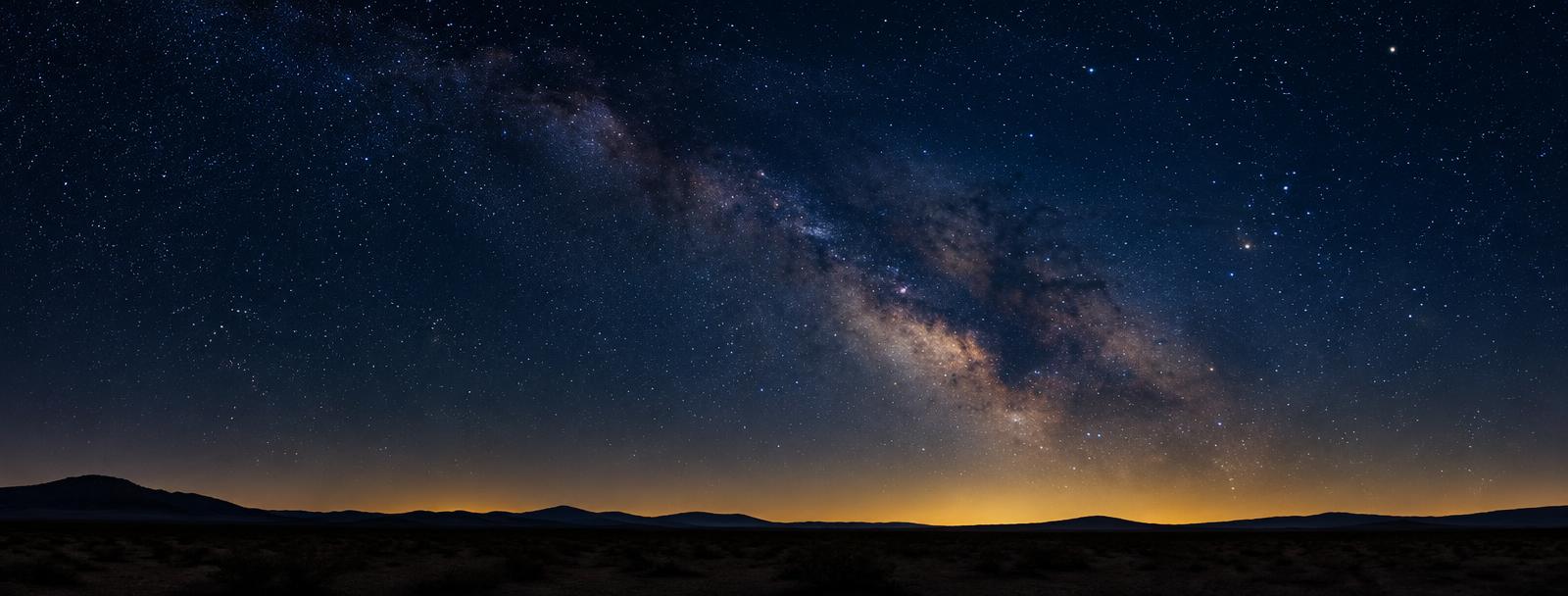
Chapter 1: Is the World Independent of Its Creator?
A Fundamental Question
Does the world exist independently of God, or does it depend on Him at every moment?
According to Chassidic philosophy, the answer is that all existence depends continuously on the Creator. God did not merely create the universe in the distant past and leave it to operate on its own. His creative power sustains everything that exists, at every moment.
This teaching is explained in Tanya, Shaar HaYichud VehaEmunah, Chapter 1.
What Does the Torah Teach?
The Torah states:
“And you shall know this day and consider it in your heart, that the Lord is God in heaven above and upon the earth below; there is no other.”
— Deuteronomy 4:39
At first glance, this verse might seem to mean simply that there are no other gods in heaven or on earth.
But the Alter Rebbe, Rabbi Shneur Zalman of Liadi, explains that the verse teaches something deeper: nothing in existence possesses an independent existence apart from its Creator.
The question is not merely whether there are other gods. It is whether anything in creation can continue to exist without the divine power that brings it into being.
Creation Is Continuous
The Book of Psalms states:
“Forever, O Lord, Your word stands in the heavens.”
— Psalms 119:89
The Baal Shem Tov explained that God's creative words are not merely a record of something that happened in the past. The divine power expressed through those words continually sustains creation.
In Genesis, God says:
“Let there be a firmament in the midst of the waters.”
— Genesis 1:6
According to the Chassidic explanation presented in Tanya, the divine creative power associated with this command continues to sustain the heavens.
If that creative power were withdrawn, even for a moment, the heavens could not continue to exist.
This principle applies not only to the heavens but to everything in creation.
Even Inanimate Matter Depends on God
We usually distinguish between living things and inanimate objects. Plants grow, animals move, and human beings think and act, while stones, soil, and water appear to have no life of their own.
Yet Tanya teaches that even inanimate matter depends continuously on the divine creative power.
A stone does not sustain its own existence. Neither does the earth or the water. Their existence depends on the Creator just as surely as that of living beings.
This does not mean that a stone is a living organism in the ordinary physical sense. Rather, it means that its very existence depends on a divine life-force that continually brings it into being.
The Ten Divine Utterances
The Torah describes creation through ten divine utterances, beginning with the words “Let there be light.”
According to Tanya, these utterances express the divine power through which the world and everything in it came into existence.
The Hebrew names of created things also have significance in this teaching. The Alter Rebbe explains that the Hebrew letters associated with creation serve as channels through which divine creative energy reaches individual creatures.
Through combinations, substitutions, and other transformations of letters, this creative energy is conveyed in a way that allows each created thing to exist according to its particular nature.
This is a concept rooted in the spiritual teachings of the Torah and Kabbalah, rather than a claim about the physical mechanism of nature.
A Simple Analogy
Imagine a lamp that shines because it receives electricity.
The light depends on a continuing source of power. If that power is interrupted, the light disappears.
In a similar, though not identical, way, Chassidic philosophy teaches that the world depends continuously on its Creator.
The analogy helps illustrate the idea of dependence, although the relationship between God and creation is far deeper than the relationship between a lamp and its electrical supply.
Does This Mean That God and the World Are the Same?
Not in the simple sense that the physical world and God are identical.
The teaching is that creation depends entirely on God, while God does not depend on creation. The world is real as a created reality, but it has no independent existence apart from its Creator.
This distinction is essential to understanding the concept of Divine Unity in Chassidic philosophy.
A Question to Reflect On
If everything depends on the Creator at every moment, how might this change the way we see the world and live our lives?
We may begin to approach life with greater humility and gratitude. Instead of taking existence for granted, we can recognize that every moment is an opportunity to act with purpose.
This awareness can inspire us to treat other people with respect, take responsibility for our choices, care for the world around us, and use our lives to bring goodness into the world.
The teaching of continuous creation is not merely an abstract philosophical idea. It invites us to reconsider our relationship with existence itself.
The Main Idea
The world is not independent of its Creator. According to Chassidic philosophy, God's creative power continually sustains everything that exists, at every moment. Recognizing this can deepen our sense of gratitude, responsibility, and purpose.
God and the World: Why Creation Depends on Its Creator
Chapter 2: The Difference Between Human Creation and Divine Creation
Does the World Need Its Creator After It Has Been Created?
When a person builds something, the finished object can usually remain in existence without the builder's continued involvement. A craftsman can create a vessel, put it aside, and leave it behind. The vessel continues to exist even when the craftsman is no longer working on it.
But is the creation of the universe the same?
According to Chassidic philosophy, the answer is no. The relationship between God and creation is fundamentally different from the relationship between a craftsman and the object he makes.
The Alter Rebbe explains in Tanya, Shaar HaYichud VehaEmunah, Chapter 2, that the world does not merely depend on God for its beginning. It depends on His creative power at every moment.
Creating Something from Nothing
Human beings generally create by transforming something that already exists.
A silversmith, for example, can take a piece of silver and shape it into a beautiful vessel. The shape changes, but the material was already there.
This is an example of creating something from something else.
The Torah's account of creation describes something entirely different: God brought the universe into existence from nothing.
In Jewish thought, this is known as yesh me'ayin — creation ex nihilo.
Before creation, the universe did not exist. Its existence is not something it possesses independently of its Creator.
According to the Alter Rebbe, this distinction helps us understand why creation must continually depend on God's creative power.
Why Must Creation Be Sustained at Every Moment?
Imagine that a craftsman finishes making a vessel and walks away. The vessel remains because its existence no longer requires the craftsman's active work.
But according to Tanya, creation is not like a finished vessel.
Because the universe was brought into existence from nothing, its continued existence depends on the divine power that continually sustains it.
If this creative power were withdrawn, even for an instant, creation would cease to exist.
This teaching invites us to reconsider an assumption we often take for granted: that the world exists entirely on its own once it has been created.
In Chassidic philosophy, existence is not independent of its source. The Creator continually sustains everything that exists.
What Does the Splitting of the Red Sea Teach Us?
The Torah describes the splitting of the Red Sea as a great miracle.
God brought a strong east wind, and the waters parted, allowing the Israelites to pass through the sea.
The Alter Rebbe uses this event to illustrate an important principle.
Water normally flows according to its natural properties. For it to stand like a wall, as described in the Torah, something extraordinary was required.
If the force sustaining this unusual state had ceased, the waters would have returned to their normal flow.
The lesson is that even a change in the natural order depends on the power that brings about and sustains that change.
The Alter Rebbe then makes a deeper point: if an extraordinary event requires divine power, how much more does the very existence of the universe depend on its Creator?
After all, the existence of creation itself is a wonder far greater than a change within creation.
Divine Providence: Is God Still Involved in the World?
This teaching also helps explain the Chassidic understanding of Divine Providence.
God is not described merely as a Creator who brought the universe into existence and then became uninvolved in its affairs.
Rather, the divine relationship with creation is continuous.
The Alter Rebbe connects this understanding with the belief in Divine Providence and with the miracles described in the Torah. Creation remains dependent on its Creator, rather than operating as a completely independent system.
This does not mean that we can always understand why particular events occur. It means that, according to this teaching, the world is never beyond the Creator's sustaining power.
The Divine Power That Sustains All Existence
The Book of Nehemiah states:
“And You give life to them all.”
— Nehemiah 9:6
The Alter Rebbe explains this verse in the context of continuous creation: God's power does not merely give life to living organisms. It sustains the existence of all created things.
The heavens, the earth, living beings, and even inanimate matter all depend on the Creator.
The divine creative power is described through the metaphor of speech, drawing on the Torah's account of creation through God's utterances.
This is not speech in the ordinary human sense. God is not a physical being with a human body or vocal organs. Rather, the language of divine speech expresses the way creation receives its existence from its Creator.
What Does This Mean for Our Lives?
If creation depends on God at every moment, then existence itself is something we should never take for granted.
This understanding can inspire us to approach life with humility and gratitude. We may begin to see the world not merely as a collection of objects, but as a creation whose existence has a deeper source.
It can also encourage a sense of responsibility.
If we recognize that life is a gift, we can ask ourselves how we use that gift. Do our actions bring goodness into the world? Do we treat other people with respect? Do we act honestly and responsibly, even when no one is watching?
These questions connect a profound spiritual teaching with the choices we make every day.
A Question to Reflect On
If the world depends on the Creator at every moment, what does this teach us about our own place and responsibility in the world?
Perhaps it reminds us that we are not entirely self-sufficient, and that our lives are part of something greater than ourselves.
We can respond to this awareness through gratitude, humility, moral responsibility, and kindness toward others.
We may not control everything that happens in life, but we can take responsibility for the choices we make and for the goodness we bring into the world.
The Main Idea
According to Chassidic philosophy, God did not simply create the universe in the past. His creative power continually sustains all existence. Understanding this relationship can deepen our gratitude, strengthen our sense of responsibility, and inspire us to live with greater purpose.